PEAK Institute (Pedagogy for Engagement, Access, & Knowledge)
The PEAK (Pedagogy for Engagement, Access, & Knowledge) Institute is designed by and for instructional faculty dedicated to student success through equitable course and curriculum design. This is a professional development opportunity that provides a cohort based exploration of individual, institutional, and structural barriers to success in higher education in rural-serving communities.
Please explore this site for more information about the institute. If you are interested in participating in the 2026/27 cohort and/or have additional questions, please click the link below and we'll be in touch! Please Note: all levels of experience with equity-minded teaching & learning practices are encouraged to participate.
Why Equity? Why Now?
Shasta College, as an open access institution of higher education, has been dedicated to key principles of equity since its founding.
However, access is not enough. As Associate professor of higher education leadership, Anthony Abraham Jack, highlights, "access is not inclusion". A truly inclusive learning environment requires deep individual, institutional, and structural reflections on the policies and practices in and outside of the classroom that undermine students' ability to thrive.
The PEAK Institute is a community of practice that provides the support and tools faculty need to create learning environments where all students thrive.
The PEAK Institute is a community of practice that provides the support and tools faculty need to create learning environments where all students thrive.
Faculty Testimonials
The impact of this institute is being felt both in and outside of the classroom here at Shasta College. Quantitative data highlights how the Institute is improving learner success. Qualitative data, as evidenced below, underscores the power of the Institute for faculty in their classrooms.
"The course was a revelatory experience for me as an educator by allowing me to examine and question many assumptions that I have simply accepted and internalized over three decades. These assumptions guided my teaching and shaped the way that I thought of and interacted with my students, and the course helped me recognize how some of the practices I used had the unintentional effect of adversely impacting the educational experience of many of my students. This made me want to revise and reimagine many of my teaching practices and assignments to help minimize and eliminate these consequences, helping me be a more equitable and effective instructor. I would also add that it was an amazing experience to spend time with and get to know colleagues from different departments and programs. We're often siloed within our own areas, and the Institute gave me an opportunity to get out of my silo and recognize the amazing, inspiring work that other do here at Shasta College."
"What I found most valuable were the pedagogical tools that we could apply to our courses right away, such as the liquid syllabus, grading for equity strategies, and being able to see my personal data."
"The safe place to unpack complicated issues and be vulnerable."
"The dedicated space to convene with curious colleagues whom collectively want to improve their instruction. It was nice to have coursework, discussions, and regular meetings where we align around the mission of providing equitable practices and services to our students."
About Us
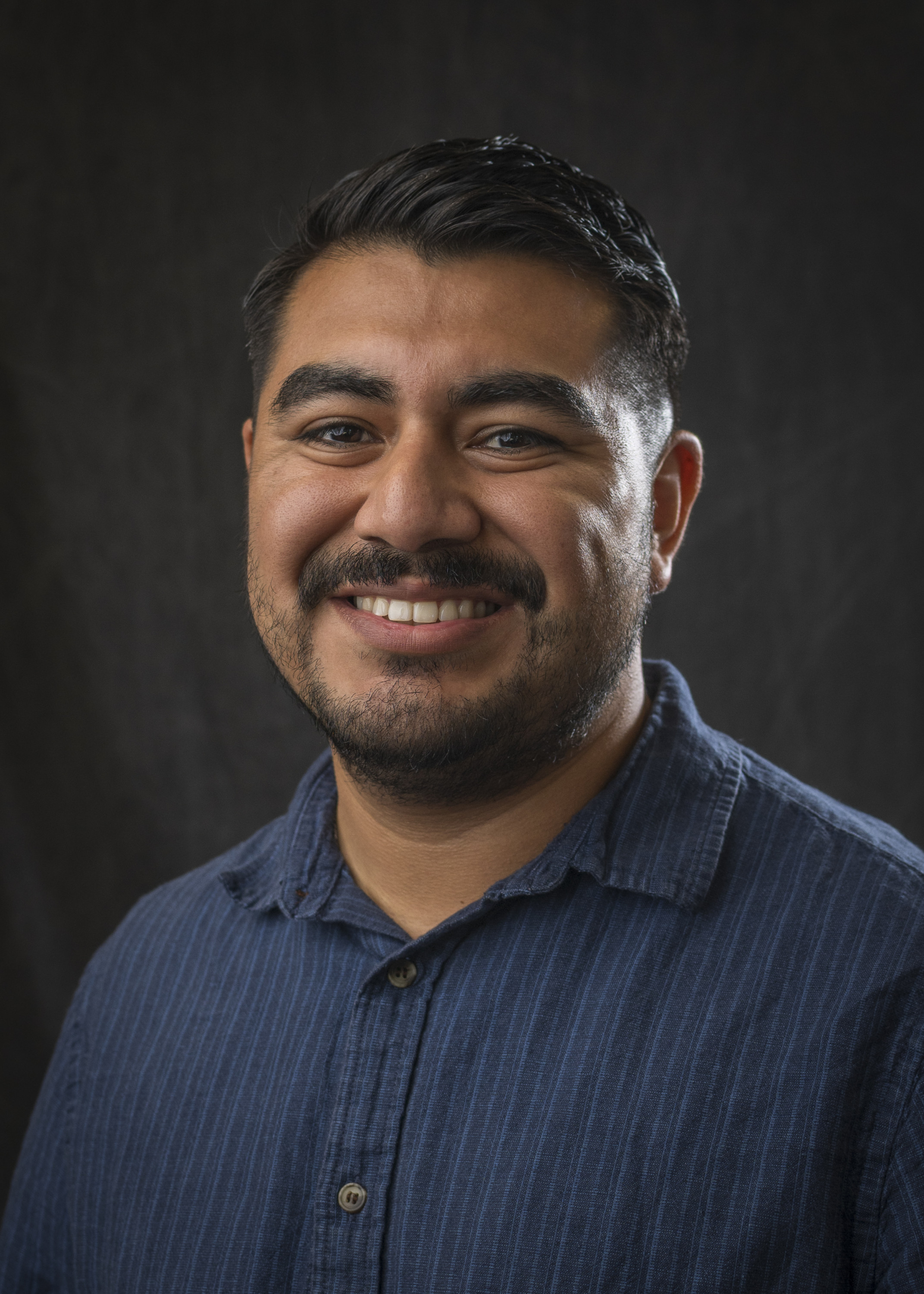
My name is Erick Calderon (he/him/él) and I have the pleasure of teaching Ethnic Studies at Shasta College! I joined the campus Spring of 2025 and was able to sneak into a PEAK session during my first semester and absolutely loved it. After hearing similar sentiment among my peers, I joined PEAK Fall of 2025 and will be facilitating at the start of Spring 2027. I earned my BA from BYU in Sociology and Latin American Studies, and my MA from UCSD in Latin American Studies. I am excited to join you and grow with you as we go through this journey together! ecalderon@shastacollege.edu

Hello! My name is Sarah Innes (she/her/hers) and I have been working at Shasta College for twenty years, as a Part-Time English Instructor as well as the Coordinator of the Supplemental Instruction (SI Program). I adore teaching writing—especially Creative Writing—but my greatest love is the professional development of tutors, SI Leaders, and Faculty. Over the years I have had the opportunity to facilitate a variety of trainings and workshops for Faculty and students, where my primary goals are building on existing strengths, facilitating belonging, and working towards more open, equitable communities. I loved being part of the Peak Institute as a participant—it was truly one of my most meaningful experiences at Shasta College—and I am thrilled to be working with Jen as a co-facilitator this year. I hope that this institute proves as valuable for you as it has been for me, and I look forward to learning with all of you. sinnes@shastacollege.edu
Hello! My name is Jen McCandless (she/her/hers), and I’ve been part of the Shasta College community for twenty-eight years. While my core passion is teaching math, I’ve also served as the faculty Professional Development Coordinator, currently help train tutors in our Tutoring and Learning Center, and have co-facilitated the PEAK Institute off and on since 2022. Through these roles and my work with Guided Pathways, I’ve grown increasingly passionate about advancing equity in my classroom, within tutoring, and across our entire institution. I’m thrilled to co-facilitate this institute alongside Sarah and Erick, and I look forward to learning and growing together!
jmccandless@shastacollege.edu

My name is Heather Wylie (she/her/hers) and I have had the honor of teaching sociology at Shasta College since 2006 and facilitating the PEAK since its start in 2022. My undergraduate degree is in Women's Studies & Anthropology from UCSB followed by my graduate work in sociology UCD. Student success grounded in systems dedicated to inclusion and access inspire my passion for this institute. I am excited for another year of exploration, reflection, and engagement with my colleagues.
hwylie@shastacollege.edu
A (Quick) History
The seeds of the PEAK were planted by the Culturally Responsive Curriculum workgroup in the spring of 2021. Convened by Dr. Frank Nigro, a group of instructional faculty came together to explore best practices around the design, implementation, and impact of inclusive course design. This conversation led us to Santa Ana College's Equity Institute for instructional faculty. With their support and curriculum, Shasta College offered the first Equity-Minded Teaching and Learning Institute during the 2022-2023 academic year. Since then, facilitators have continued to tailor the institute to the needs of Shasta College faculty and the students they serve.
Institute Fundamentals
The PEAK Institute is built upon a framework that examines equity at the intersections of the "personal, professional, and systemic" with the goal of dismantling barriers for all learners.
Below you'll find Institute fundamentals including a brief history of how it came to be, overall learning outcomes, time commitment and compensation, facilitator biographies, and module learning objectives.
Learning Outcomes
The Institute's learning outcomes are designed to provide a balance between understanding rural-specific challenges, applying equity-centered strategies, and fostering a reflective and community-oriented approach.
Guiding Framework
The Institute is guided by a framework that involves a personal, professional, and system analysis of our services, practices, and policies that we have in place.
- The personal involves us having a common understanding of the equity and social justice terminology, learn about the inequitable historical context of our institution, and engage in ongoing critical reflection that leads to increasing our self-awareness.
- The professional involves incorporating equity-minded and culturally responsive teaching and learning practices, services, and environment for students.
- The systemic involves evaluating, transforming, and designing flexibility in our campus culture, policies, processes, and procedures to support the diverse needs of our students.
Participants will engage in reflective practices to examine assumptions, biases, and teaching approaches, fostering a continuous commitment to equity and inclusivity in rural educational contexts.
Participants will identify and analyze the systemic barriers and unique challenges faced by learners in rural communities, including those related to economic, cultural, geographic, and technological disparities.
Participants will develop and adapt curriculum and instructional materials that are culturally responsive, locally relevant, and aligned with the diverse needs and experiences of rural learners.
Participants will implement strategies to increase access to educational resources, foster engagement, and support academic success for underserved populations in rural areas, including first-generation and low-income students.
Participants will analyze disaggregated student success data to identify equity gaps and develop actionable plans to address disparities in access, retention, and achievement for marginalized student populations. Participants will evaluate the effectiveness of equity-focused interventions using qualitative and quantitative data.
Format & Time Commitment
The PEAK Institute is a professional development opportunity for instructional faculty. It runs mid-November through mid-May 2026. The cohort is limited in order to provide time and space for deep reflection and application of best practices in the classroom. Participants are asked to commit to the full year as a strong sense of community is essential for the success of the institute.
The institute is offered in a hybrid format. Participants will engage in online curriculum and reflection activities (via a Canvas course) in preparation for monthly, in-person sessions where the group will come together in a facilitated discussion of the material.
Participants can expect to dedicate approximately 1.5 hours/week to the online portion of the institute and 3 hours a month for in-person sessions.
In person sessions will take place monthly starting in September and ending in May. These will most likely be scheduled during a 2-3 hour block on Fridays. Specific dates will be determined based on the availability of those that participate.
*Please Note: Successful completion of the institute is defined as not missing more than 1 session and submitting a minimum 70% of all activities.
Full Time Faculty: Compensation for successful completion of the institute for full-time faculty can take the form of flex credit, units toward Step Advancement, or a stipend as follows:
- Flex credit: 40 hours
- 2 units toward Step advancement
- Stipend: $2,200
Part Time Faculty: Compensation for successful completion of the institute for part-time faculty is a stipend of $2200.
Participants will leave the institute with not only a community of equity-minded colleagues, a deeper sense of what equity means personally and in the classroom, but the following artifacts to contribute to a more equitable learning experience for all students:
- Revised course syllabus (including an online version)
- Redesigned course curriculum and evaluation tools
- Actionable course level data/data sets
- Opportunities for institutional policy and practice reform
Institute Curriculum
The PEAK curriculum is designed to provoke reflection on and revision of course policies, practices, and assessment that center equity. In doing so, the goal is to create inclusive learning environments where all students thrive.
The curriculum is roughly divided into two "buckets". The fall semester is focused on self-reflection and the development of a shared vocabulary while spring semester is dedicated to putting equity into practice.
Modules 1 A/B are dedicated to creating a sense of community, self-reflection, and the development of a shared language around equity and inclusion in the classroom.
Module 1A (Pre-Session) Learning Objectives: Orientation & Introductions
- Describe the Institute's hybrid format
- Identify Institute Goals/Outcomes
- Reflect on key equity-minded concepts
- Connect with the PEAK cohort & facilitators
Module 1B (Session #1) Learning Objectives: Foundational Concepts
- Compare and contrast brave vs. safe spaces
- Recognize privilege and power dynamics
- Analyze anti-DEIA efforts
- Recognize intersectionality as it pertains to identities and power dynamics.
- Evaluate the continuum of cultural competence & cultural humility
Modules 2 A/B are focused on contextualizing equity and using course level data to inform curriculum development and assessment tools.
Module 2A (Pre Session) Learning Objectives: Doing Equity in Context
- Discuss state and college wide efforts to center equity in the student experience
- Apply research on equity in teaching and learning to your courses
- Compare tools for centering context & equity in teaching & learning
Module 2B (Session #2) Learning Objectives: Understanding & Responding to Data
- Describe what "rural" means in general and what this looks like here at Shasta College
- Identify the challenges and opportunities of tailoring equity to rural-serving institutions of higher education
- Analyze on the importance of grounding equity strategies in data
- Reflect on college and course level data and disproportionate impact
Modules 3 A/B are dedicated to rethinking syllabus design through an equity lens and centering student voice and lived experiences in curriculum content and design.
Module 3A (Pre Session) Learning Objectives: Expanding Equity
- Explain how Critical Race Theory provides a framework for centering equity in teaching & learning
- Analyze the impact of an intersectional approach to equitable course design
- Discuss strategies for supporting neurodiverse learners and online learners
Module 3B (Session #3) Learning Objectives Towards a Transformative Classroom
- Contextualize DEIA centered work within the current backlash
- Examine the "coaching" framework as a means of supporting the whole learner
- Analyze our DEIA practices through an intersectional lens
- Discuss equitable learner onboarding strategies
Modules 4 A/B are dedicated to an examination of equitable onboard & grading practices. The cohort will read and reflect on Feldman's book "Grading for Equity".
Module 4 A (Pre Session) Learning Objectives: Redesigning Learner Onboarding
- Identify barriers to successful course onboarding for learners using an intersectional lens
- Implement inclusive strategies for equity-minded student onboarding
- Design a liquid syllabus that centers equity in design and implementation
Module 4 B (Session #4) Learning Objectives: Grading for Equity
- Reflect and contrast traditional grading with more equitable grading
- Work with peers to grapple with texts and ideas on expanding equitable grading practices
- Summarize and present on takeaways on accuracy, bias-resistant, motivation, and practices that "lift the veil" and build "soft skills."
- Reflect on a new vision of grading in your classroom and Shasta College as a whole
Modules 5 A/B examine the role grading rubrics in ensuring transparency & strategies for equity-minded assessment.
Module 5 A (Pre Session) Learning Objectives: Redesigning Assessments
- Identify Inequities in Traditional Grading Practices
- Implement Equitable Grading Strategies
- Evaluate the Impact of Equitable Grading on Student Outcomes
Module 5 B (Session #5) Learning Objectives: Rubrics as an Equity Tool
- Understand the Role of Rubrics in Promoting Equity
- Develop Inclusive and Transparent Grading Rubrics
- Evaluate Rubric Effectiveness for Equity
Modules 6 A/B are dedicated to the design and implementation of project based learning activities and backwards course design.
Module 6 A (Pre Session) Learning Objectives: Rethinking Course Design
- Describe various teaching theories used to redesign the classroom experience
- Evaluate the benefits of active learning pedagogy
- Explain why backwards designed curriculum is essential to meeting course goals
- Reflect on the value of project based learning to the development of critical thinking skills
Module 6 B (Session #6) Learning Objectives: Design & Implementation
- Reflect on student feedback on equity practices in your class
- Compare and consider the grading rubrics of colleagues
- Understand the expectations for the "redesigning lesson plans" assignment
- Prepare for the final equity institute presentation
- Explore and implement new approaches to lesson design
Modules 7 A/B explore faculty's spheres of influence beyond the classroom to institutionalize equitable teaching and learning practices.
Module 7 A (Pre Session) Learning Objectives Leveraging Our Spheres of Influence
- Identify your spheres of influence on campus and in the classroom
- Describe the relationship between academic freedom and freedom of speech
- Analyze the COR and program review processes as tools for ensuring equity in learning
Module 7 B (Session #7) Learning Objectives Institutionalizing Equity
- Identify institutional policies and practices that ensure equity-minded teaching practices campus wide
- Analyze best practices for supporting faculty implementation of equity-minded strategies
Modules 8 A/B will be an opportunity to reflect on and celebrate the work done throughout the institute. Participants will be asked to present on their experiences to an audience that includes campus and community members.
Module 8 A (Pre Session) Learning Objectives: Reflections On Your Equity Journey
- Reflect on the value of this institute to you individually and your role as an educator
Module 8 B (Session #8) Learning Objectives: Celebration & Next Steps
- Describe what next steps you plan to take to ensure equity is centered in your teaching and learning